- Mon - Fri: 9.00 am - 5.00 pm

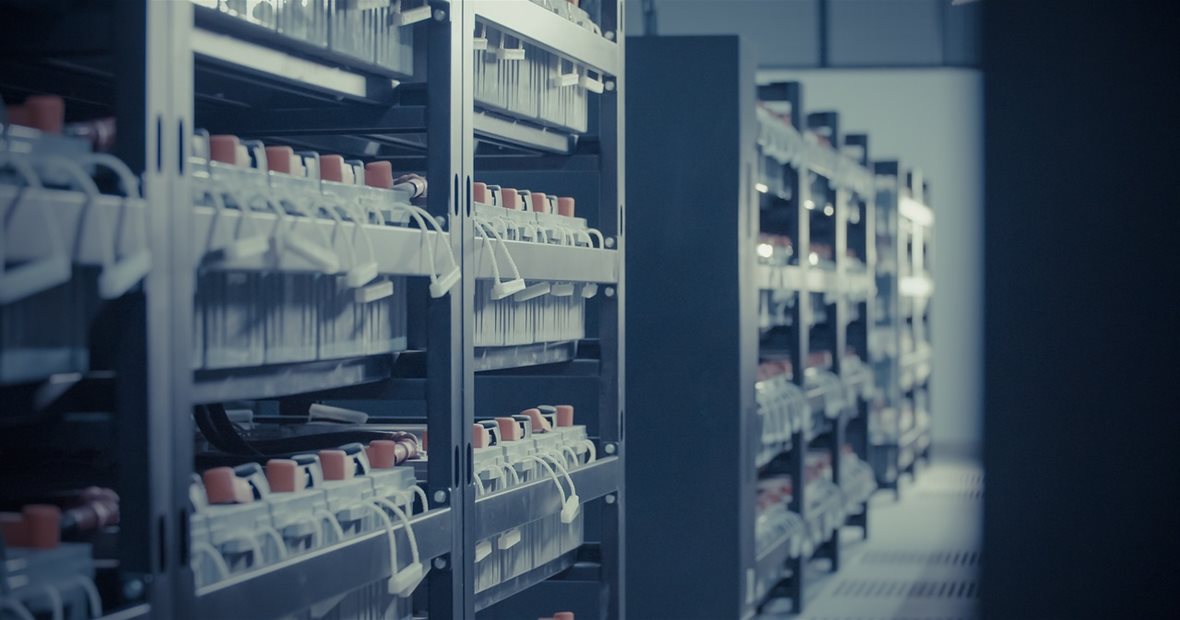
The physical layer of the AI trade: hyperscale data-centre capacity is being contracted years in advance.
More than half a trillion dollars. That is the scale of capital the world's largest cloud companies are committing to artificial-intelligence infrastructure in a single year. The question for allocators is no longer whether the AI buildout is real — it is where, within a spend this large, the returns actually accrue.
Goldman Sachs estimates that AI companies may invest more than $500 billion in 2026, with the hyperscaler consensus tracking toward roughly $527 billion as full-year guidance firmed up through the latest earnings season. Microsoft, Amazon, Alphabet and Meta each now plan to deploy capital expenditure measured in the hundreds of billions, and by industry estimates around three-quarters of that spend is AI-specific — compute, networking and the data centres to house it. Whatever the precise final tally, the order of magnitude is settled: this is the largest concentrated infrastructure cycle in modern corporate history.
It sits inside a market on a steep, durable trajectory. By the figures we anchor our thesis to, the AI market is on track to expand from roughly $602 billion in 2024 to about $3.6 trillion by 2033 — a compound annual growth rate near 29% (MarketsandMarkets). A spend of this size invites the obvious objection: is it a bubble? Our answer is that the most important characteristic of the 2026 capex cycle is how little of it is speculative.
Why the spend is contracted, not speculative
Capital markets price AI as a bet on the future. The capex itself is closer to a backlog. The bulk of 2026 hyperscaler spending is not an option on demand that may or may not appear — it is the cash cost of orders already placed: multi-year data-centre leases, power-purchase agreements signed half a decade out, semiconductor allocations booked against fixed manufacturing capacity, and enterprise cloud commitments already on the books. The buildout is constrained less by willingness to spend than by the physical ability to deliver — power interconnects, advanced-packaging capacity, and high-bandwidth memory are the gating items, not demand.
That distinction matters for how an allocator underwrites the theme. A speculative cycle unwinds when sentiment turns. A contracted cycle unwinds only when counterparties default on commitments they have already capitalised — a far higher bar. The risk in AI infrastructure is therefore less about the cycle evaporating and more about where in the stack the economics prove durable once the first wave of capacity comes online.
The 2026 capex cycle is not a forecast. It is a backlog — power, packaging and memory already contracted. The question for allocators isn't whether AI gets built. It's who keeps the margin once it is. — Extended Investment, AI Desk
The stack — and where margin concentrates
We think about AI as three layers, and we own them deliberately rather than buying the theme through a single name. The chip layer is where scarcity is most acute today. The shift now under way — from training enormous models to inference, the business of serving them at scale — is rewriting chip demand. Inference is less compute-bound and more memory-bound: latency in memory access directly governs how fast tokens are generated, which is why high-bandwidth memory (HBM) has become the true bottleneck. HBM consumption is growing more than 70% year over year, and producing a single bit of it consumes roughly 300% more wafer capacity than standard DRAM — a structural squeeze that hands pricing power to the few firms that can supply it.

The chip layer: advanced packaging and high-bandwidth memory, not raw logic, are the binding constraints of the 2026 cycle.
Beneath the marquee accelerator names sits an even tighter chokepoint: advanced packaging. The technology that bonds logic and memory stacks together for AI workloads runs through a handful of fabs, and the foundry that dominates leading-edge manufacturing earns net margins north of 40% precisely because that capacity cannot be replicated quickly. In a cycle defined by who can deliver, the constraint owners — memory and packaging — capture disproportionate economics.
Cloud and application
The cloud layer is the hyperscalers themselves: the operators funding the buildout and converting today's capital expenditure into contracted, recurring rental of compute. Their margin question is whether AI revenue scales faster than the depreciation of the assets bought to produce it — a genuine debate, and the reason we favour operators with the deepest enterprise commitments and the most efficient cost of capital. The application layer sits on top: the software companies that turn raw model capability into priced, sticky workflows. It is the smallest share of the dollars today and potentially the largest share of the durable margin tomorrow, because it monetises intelligence without carrying the capital weight of the infrastructure beneath it.
What it means for allocators
Our conclusion is not "own AI." It is a more disciplined instruction: concentrate within the theme, and diversify across the stack. Concentrate, because a spend this large rewards conviction in the specific chokepoints — memory, packaging, the operators with real backlog — rather than a thin slice of every ticker with "AI" in its description. Diversify across layers, because the chip, cloud and application tiers carry different risks and peak at different points in the cycle; owning all three is how a portfolio captures the margin as it migrates up the stack over the decade.
That is how Extended Investment positions the pillar — a full-stack allocation sized to an allocator's risk budget, weighted toward the constraint owners while the constraint persists, and rebalanced toward application economics as capacity catches up with demand. The $500 billion question has a simple answer and a hard one. The simple answer is that the spend is real and largely already committed. The hard answer — who keeps the margin once it is built — is the one worth being paid to get right.
Sources: 2026 AI capital-expenditure estimate — Goldman Sachs Research; AI market size & CAGR — MarketsandMarkets; inference shift, HBM and advanced-packaging dynamics — industry research (TrendForce, TSMC disclosures). See our full Sources & Methodology.
This article is information, not investment advice. It does not constitute an offer, solicitation, or recommendation to buy or sell any security, and the figures cited are drawn from third-party research that may be revised. Forecasts are inherently uncertain. Read our full Disclosures before acting on anything here.